I met my younger self for coffee this morning. She agreed to meet at 10. She almost didn’t show up, but I told her I was paying, so of course, I knew she wouldn’t stand me up. She was 30 minutes early, and so was I.
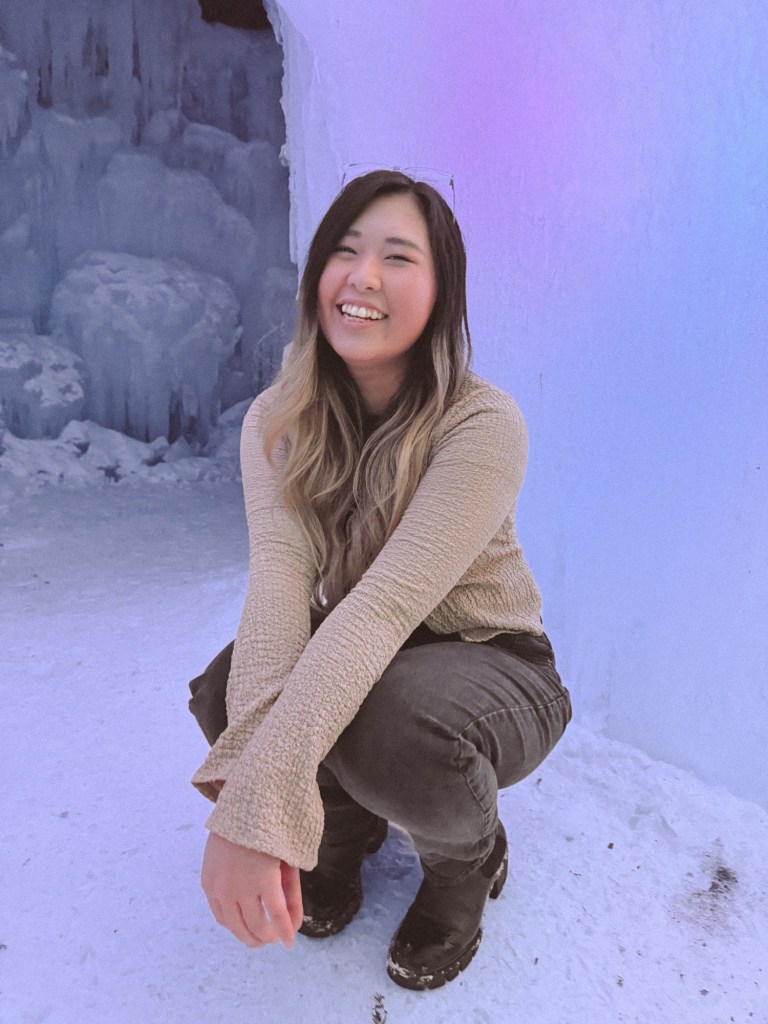
She wore her brown bomber jacket with black skinny jeans. I wore mom jeans with a cream top and a trench coat. She had jet-black hair that framed her face; my hair, now curly, in black-blonde balayage.
She eyed me carefully, taking in the differences—the small ways time had shaped me into someone she never imagined becoming.
“You look different,” she finally says.
“I know.” I smile. “You will too.”
She doesn’t respond right away.
She ordered an iced caramel macchiato—her sister‘s favorite. I ordered a hot white mocha.
I knew I had to strike up the conversation first because I know she’s anxious and afraid to be seen.
“How are you?” I ask.
She doesn’t respond but just stares, like she’s afraid to speak.
“It’s okay,” I tell her. “It’s a safe space.”
“I’m okay,” she finally says quietly.
I know that’s not true. I take a sip of my latte before telling her, “I became the photographer we’ve always wanted to be.”
She surprisingly asks, “Have we shot weddings like we dreamed of?”
I tell her, “Yes.”
She smiles and asks me, “Will I always be afraid?”
“No,” I tell her. “You wake up one day, and you want to try. You’re a happy person. You don’t hold anger, hurt, or resentment anymore. You’re just happy.”
She asks, “How?”
“I worked on myself, and I chose to put trust in myself. I made the active, conscious effort to break generational traumas and cycles. I let people show up as they are and decided if they’re good enough for me—if I was willing to tolerate it or not. I put myself first.”
She’s surprised.
I tell her, “You won’t be self-conscious forever. You love to yap to anyone who’s willing to listen.”
She laughs because she doesn’t believe that.
She hesitates for a moment before speaking, her voice quieter than before.
“I don’t like how I look.”
I don’t react right away. I let her say it, let her release the words she’s held onto for so long.
“I have body dysmorphia,” she finally admits, her fingers tightening around her cup. “I hate my face, my body, the way I move. I wish I looked different.”
I shake my head softly.
“You’re perfect as you are.”
She gives me a blank stare, then looks away like she doesn’t believe me. I don’t push it, but I don’t let her sit in it either.
“One day, you’ll see yourself the way I do. You’ll realize you were never the problem. You’re not ugly.”
She stays quiet, but I can tell she’s listening.
Her voice, barely above a whisper, says, “I’m scared. I’m afraid.”
I reach over to touch her hand.
“I understand,” I tell her, “but I also want you to know that everything does get better.”
She looks down at our hands, her eyes glassy, as if she’s trying to understand how that could be true.
I tell her I experienced my first real love.
“His name was Nic,” I say, watching her reaction because I know how desperately she wants to be seen and loved.
Her brows lift slightly, curious yet cautious.
“But it didn’t work out.”
She tilts her head.
“Why not?”
I take a sip of my coffee, letting the warmth settle before answering.
“Because I did not work this hard on myself to allow and tolerate a man that won’t meet me halfway. I deserve more.”
She blinks, as if she doesn’t understand. As if the idea of deserving more feels foreign, too distant for her to grasp.
“Did it hurt?” she asks.
“Yes,” I admit. “A lot. But I let him show me who he was, and it wasn’t good enough for me.”
She studies me, searching for a crack, for remnants of the girl who once clung too tightly, who once settled for less than she deserved.
“And you’re happy now?”
I smile, not with my lips, but with my whole being.
“Yes. Happier than I ever thought possible.”
She exhales, nodding slowly, as if she’s trying to believe me. And maybe, just maybe, she does.
As the coffee date comes to an end, I tell her, “I hope we meet again.”
As I stand up to leave, I step toward her, opening my arms for a hug.
She stiffens.
“I don’t do hugs,” she mutters, shifting awkwardly.
I smile, knowing this about her, knowing that she doesn’t allow closeness so easily. But I don’t let her off the hook.
I wrap my arms around her and tell her, “I love you, and everything will be okay. I promise you. Every little bit you do to try is enough.”
She exhales sharply like she’s about to protest, but something in her softens.
And then, she leans in.
I just hold her tight.
I feel her breathing, shaky but steadying. She is still scared. Still unsure. But she’s letting herself be held, and that is enough for now.
As I pull away, I look at her—really look at her.
“You’re going to be okay,” I whisper. “Even on the days you don’t believe it, even when it doesn’t feel like it. You will be okay.”
I smile, stepping back.
“I’ll see you again,” I tell her.
She doesn’t ask when, but I say—
“When you need me.”
And with that, I turn and walk away.
But I know she’ll be okay.
Because one day, she’ll wake up and want to try.

 Panhia
Leave a comment